Why Watercolours, Screen Prints, and Cotton Rag Papers Wave in Ready-Made Frames
You framed it flat. Weeks or months later, there's a wave rolling across the middle of the sheet, or a rippled edge catching the light every time you walk past. If you're staring at a watercolour, a limited-edition screen print, or a heavy cotton rag piece wondering whether it's ruined… take a breath. In most cases, it isn't damaged. It's mounted incorrectly.
Paper isn't an inert, flat material the way people assume. It's hygroscopic - meaning it constantly absorbs and releases moisture from the air around it, expanding and contracting as it does. Framed the wrong way, that natural movement has nowhere to go, and buckling is the result which we refer to as “cockling”.
Why Some Ready-Made Frames Cause Buckling
The "Trapped on Four Sides" Problem
Many ready-made frames use a simple method: tape or an adhesive strip along all four edges of the paper, pulling it flat against the backing board. It looks perfectly flat on the day it's framed.
The problem shows up later. When humidity rises, the paper tries to expand, but with all four edges pinned down, it has nowhere to move outward. The only direction left is forward or backward, away from the mount board, which is exactly what produces that wave or dome across the surface. When humidity drops again, the reverse happens, and the paper can develop hard creases where it's fought against the tape.
Australian Humidity as the Trigger
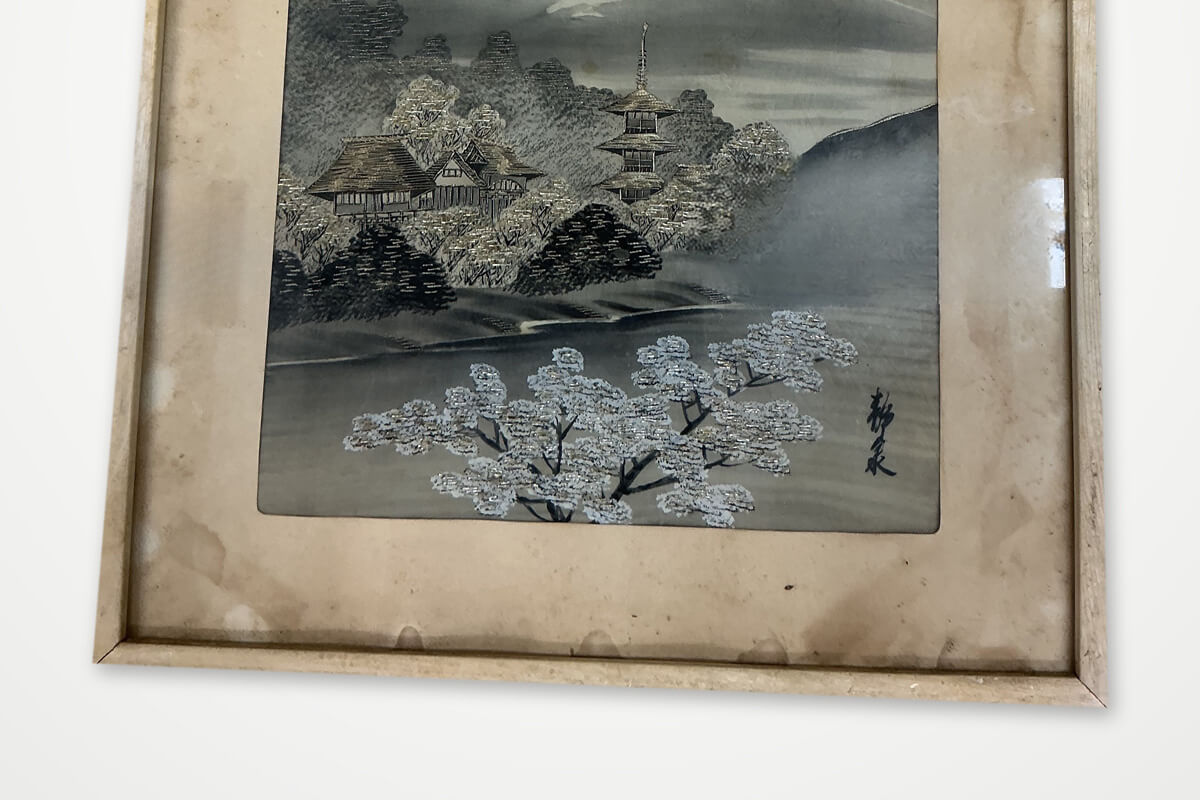
This is a particularly local problem. Coastal humidity swings through the year, combined with the jump between humid outdoor air and dry, air-conditioned or heated interiors, means that paper framed in Sydney or along the east coast is under more environmental stress than the same piece would face in a stable, dry climate. A sheet that framed up flawlessly in a shop can start rippling within a single humid summer once it's hanging on a lounge room wall.
"Is My Artwork Damaged, or Just Poorly Mounted?" - Diagnostic Checklist
Before assuming the worst, run through this checklist:
- Look at the mounting edges: Take the piece out of the frame (or look closely through the glass at the corners) - is the paper taped flat on all four sides, right to the edge?
- Check for a wave versus a hard crease: A gentle, rolling wave across the sheet is usually just the paper responding to trapped tension - reversible with proper mounting. A sharp, permanent fold or crease line is more likely mechanical damage and worth a closer look by a qualified framer.
- Look for cockling near the tape lines: If the rippling is concentrated right along the taped edges rather than spread evenly across the sheet, that's a strong sign the mounting, not the artwork, is the cause.
Paper Isn't Fabric - Why the Canvas Rules Don't Apply
If you've read our canvas stretching guide, you'll know canvas is a tensioned textile - deliberately stretched drum-tight over a rigid stretcher-frame and designed to stay that way.
Paper works on the opposite principle. It's never under tension, and it shouldn't be. Cotton rag stock, watercolour paper, and fine art screen-print papers are especially reactive because their fibres are longer and more absorbent than standard photo or office paper .They're built to hold washes of pigment and water, so they naturally take on and release atmospheric moisture more readily too. When the humidity around them changes, the sheet itself physically grows and shrinks, sometimes only fractions of a millimetre, but enough to matter once it's locked in place.
The Tempting Shortcut - Permanent Adhesive Foamcore Mounting
What It Is
One method you'll come across, especially in budget framing, is mounting the paper permanently onto foamcore using a spray adhesive, heat-activated dry-mount tissue, or a double-sided adhesive sheet to bond the entire back of the sheet to the board, rather than anchoring it at just one edge.
It's easy to see the appeal. It's fast, inexpensive, and produces a dead-flat, rigid panel with no risk of waves at all, because the paper simply can't move once it's bonded down.
Why Permanence Is a Problem for Valuable Pieces
For anything with real value such as a limited-edition print, an original watercolour, a piece you'd ever want to resell, or anything with sentimental weight, permanent mounting is the wrong call, for a few reasons:
- It can't be undone: Once a sheet is fully bonded to foamcore, separating it again means tearing fibres or leaving adhesive residue behind. There's no version of this that's reversible.
- Acid migration: Many common mounting adhesives including spray adhesives, some dry-mount tissues and some pressure-sensitive sheets, aren't pH-neutral. Over years, acids migrate into the paper fibres, causing yellowing, brittleness, and staining that spreads outward from the mounted surface, often visible as a faint "shadow" bleeding through from behind.
- Locking out movement entirely: With the full sheet bonded down, the paper has no way to expand or contract at all. The stress that a hinged mount would let escape at the edges instead gets absorbed by the fibres themselves, which can accelerate cockling, cracking, or delamination at the bond line over time.
- It affects authenticity and value: For limited-edition or collectible prints, permanent mounting is often treated the same way as trimming margins or removing a signature panel - it can measurably reduce resale and collector value.
When Permanent Mounting Is Genuinely Fine
This isn't a case against foamcore mounting altogether. It's a case against using it on the wrong pieces. For decorative prints, posters, low-cost reproductions, or anything with no sentimental or resale value attached, permanently mounting onto acid-free foamcore is a perfectly reasonable, cost-effective choice. It gives a clean, flat, gallery-style finish, and if the piece is inexpensive or replaceable, the trade-off of permanence simply doesn't matter.
The line to watch is value, not paper type. A $20 print from a homewares store is a good candidate for permanent mounting. A hand-pulled screen print numbered 4/50, or a watercolour you painted yourself, is not.
The Verdict
If a piece has any value - sentimental, resale, or archival - permanence should never be the default mounting choice. That's where reversible hinging comes in.
The Professional Fix - Reversible Hinging
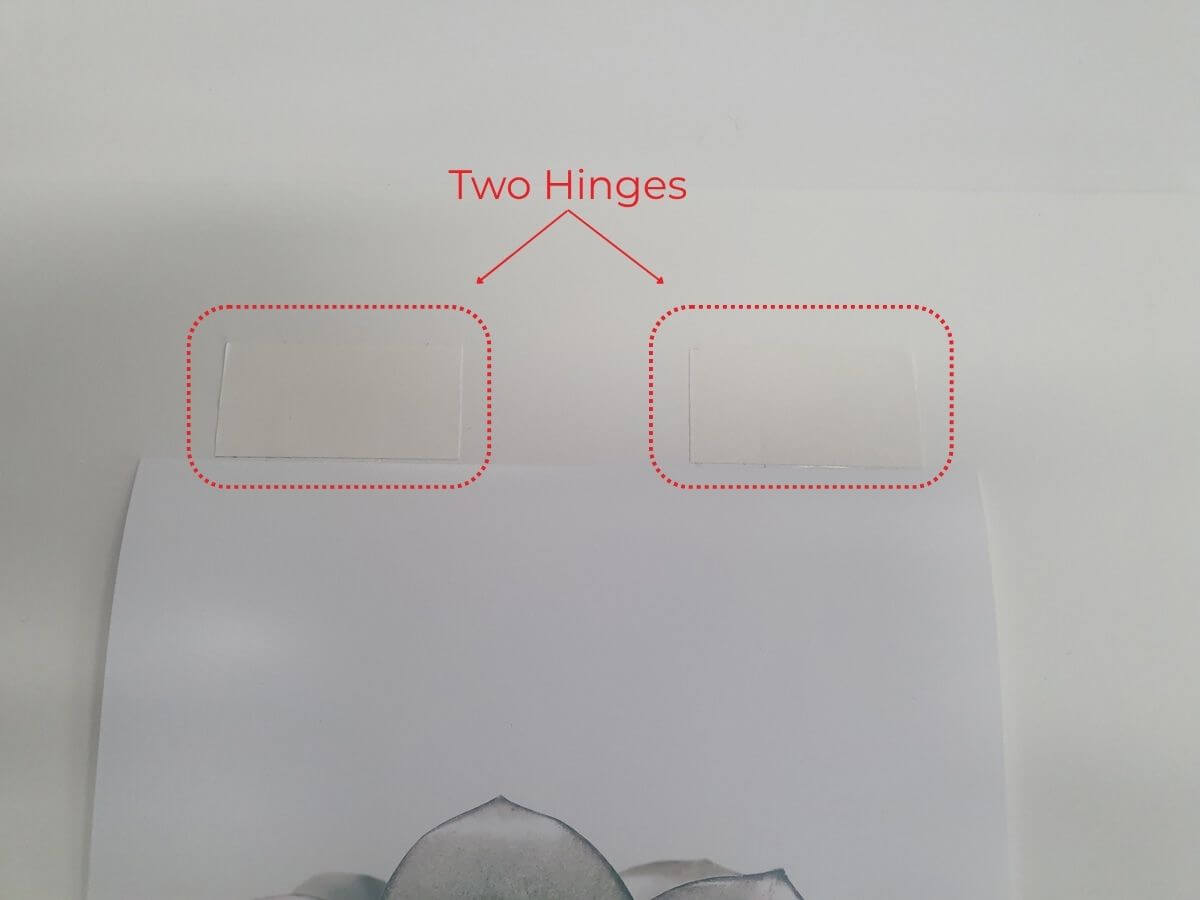
Hinging is the conservation-standard alternative, and it's built entirely around the idea that paper needs room to move.
- What it is: The artwork is attached at the top edge only (or occasionally with small floating tabs at the top corners), using an acid-free, water-reversible adhesive such as acid-free hinging tape or Japanese tissue hinges. The rest of the sheet hangs free.
- Why "reversible" matters: For anything collectible or original, a reversible hinge means the artwork can be removed cleanly at any point in the future with no residue and no damage .Exactly what conservators and serious collectors expect.
- Why it stops buckling: Because only the top edge is fixed, the rest of the sheet is free to expand and contract with the seasons. There's nowhere for pressure to build, so there's no permanent wave and resulting damage.
- Supporting materials: Pairing hinging with acid-free mounting board and spacers (to stop the paper from touching the glass) rounds out a proper conservation-grade mount.
Checklist for Anyone Framing Paper Art
- Is the paper taped on all four sides, or hinged at the top only?
- If it's permanently mounted, is the piece genuinely low-value or replaceable?
- Is there space between the paper and the glass (spacers or a mat)?
- Is the mounting board and any adhesive used acid-free?
- Does the paper move slightly when pressed, rather than sitting rigid and bonded flat?
Don't Leave It to Guesswork
A rippling watercolour or a wavy limited-edition print usually isn't a sign your artwork is failing. It's a sign it was mounted like a poster instead of a piece of art. Cheap prints can be permanently mounted with no regrets. Anything you'd hate to lose deserves a reversible hinge instead.
If you've got a piece that's buckling, or a new work you want mounted the right way from the start, head to our store locator and drop in for an obligation-free consultation with one of our qualified framing specialists.