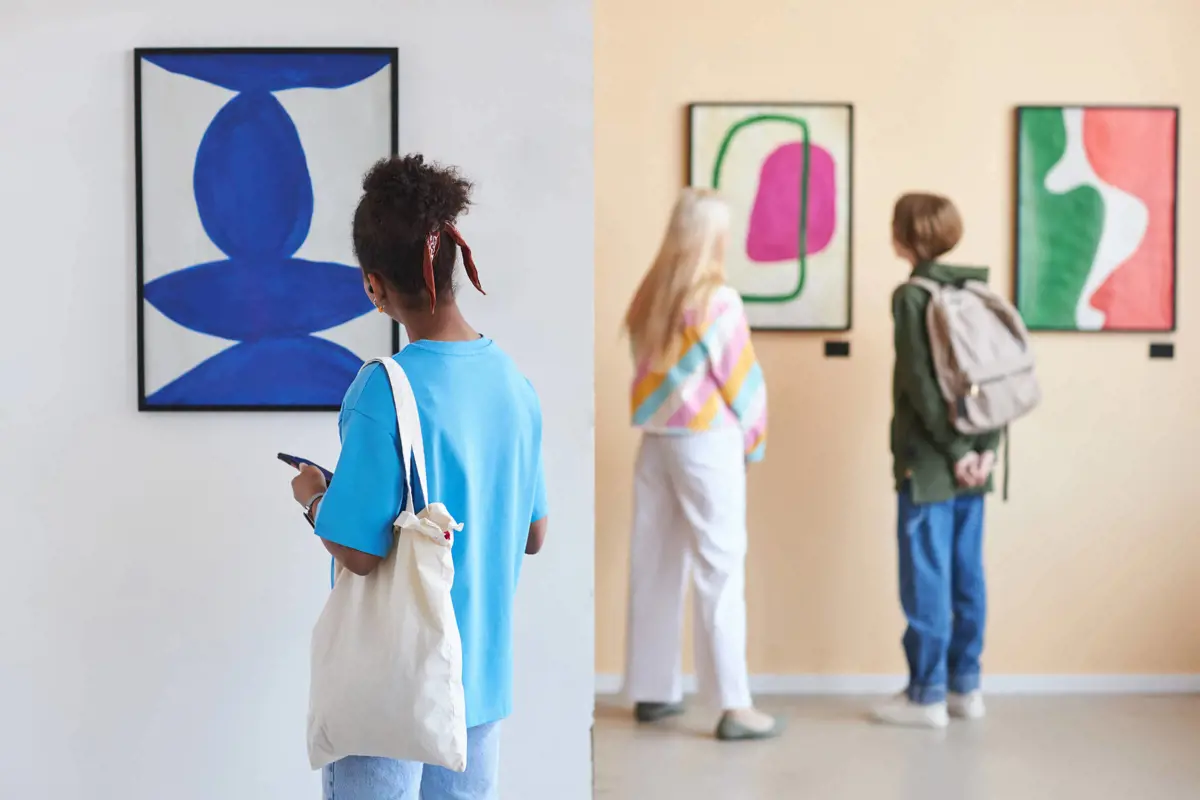
You've locked in the venue, set the opening date and narrowed your body of work down to the pieces that belong in the show. Now comes the part many first-time exhibitors underestimate; framing 15, 20 or 30 works so they look like one considered collection - on budget, and on time.
This playbook walks local Australian artists, illustrators and fine-art photographers through the framing decisions that matter most for a first solo exhibition, from choosing standard sizes that keep costs predictable to picking a frame profile that lets the work speak for itself.
Key takeaways
- Standard frame sizes are the single biggest lever on your framing budget.
- One frame profile - white, black or oak - across the whole show creates cohesion and keeps the focus on the art.
- Book exhibition framing as one batch order, at least 4-6 weeks before opening night.
- Professionally framed, ready-to-hang work removes buyer hesitation and supports a stronger retail price.
Why does framing matter so much for a first solo exhibition?
For most emerging artists, framing is the largest controllable cost of a solo show, and the first detail visitors notice when they walk into the room. Consistent, professional framing turns a group of individual pieces into a cohesive exhibition, protects the work while it hangs, and tells buyers the work is finished and ready to take home.

Inconsistent framing does the opposite. A mix of mismatched profiles, mat widths and glass finishes pulls the eye away from the art and makes a show feel assembled rather than curated. The good news is that consistency is mostly a planning decision, not a budget one.
How far ahead should you plan your exhibition framing?
Start your framing conversation 6-8 weeks before opening night and place your full order at least 4-6 weeks out. That leaves time to finalise your selection, produce or print any editions, frame everything as one batch and still keep a buffer before installation day.
Working backwards from opening night
- 8 weeks out: finalise the works in the show and measure every piece.
- 6-8 weeks out: meet your framer and choose one frame profile, matboard and glazing option for the whole show.
- 4-6 weeks out: place the full framing order as a single batch.
- 2 weeks out: collect your framed works, check every piece, and prepare wall labels and a price list.
- Installation week: hang, light and label the show.
Why a single batch order beats piece-by-piece framing
Ordering everything at once means the same moulding, the same matboard and the same glass across the whole show, so every frame matches. It also gives your framer the full picture up front, making it easier to plan production around your deadline.
If a late addition does slip through, Frame Today's same-day framing (subject to availability) can help - but treat it as a safety net, not the plan.
How do standardised frame sizes help artists stay on budget?
Standard frame sizes let you use ready-made or semi-custom frames instead of fully custom ones, which lowers the cost per piece and makes your total framing budget predictable before you start. The simplest approach is to size your work to the frame, not the frame to the work.
Size the artwork to the frame, not the frame to the artwork
If you're producing new work for the show - painting on standard-size paper, printing photographs or illustrations - choosing dimensions that match common frame sizes from the outset is the easiest saving you'll make. Printing a photograph at A3 rather than an arbitrary 31 × 44cm, for example, opens up ready-made options a non-standard size never will.
Common standard sizes for exhibition work
Size | Dimensions | Works well for | Framing option |
A4 | 210 × 297mm | Small studies, illustrations, photo series | |
A3 | 297 × 420mm | Core pieces in a print or illustration show | |
A2 | 420 × 594mm | Feature prints, mid-size works on paper | |
A1 | 594 × 841mm | Statement pieces and hero works | |
Non-standard | Varies | Originals on canvas, board or odd-sized paper |
Tip: a matboard lets a smaller image sit inside a larger standard frame - an A4 print in an A3 frame, for example - so you can keep one frame size across works of different dimensions and still get a consistent wall.
If you want to learn more about A-size frames, read our article about Understanding A-Size Frames.
Ready-made vs Tailored Everyday vs custom framing
Option | Best for | Relative cost | Flexibility |
Standard-size prints and works on paper | Lowest | Fixed sizes | |
Standard sized frames with custom mats to cater for some odd-sized artworks | Mid | Varied artwork sizes, set profile range | |
Originals, canvases, objects and conservation work | Highest | Full choice of moulding, mat and glass |
Example budget for a 20-piece show
Item | Qty | Price each | Subtotal |
A3 ready-made frame, white | 12 | $129 | $1,548 |
A2 ready-made frame, white | 6 | $149 | $894 |
Float frame for 16 × 20" (40 × 50 cm) canvas originals | 2 | $249 | $498 |
Total | 20 | $2,940 (incl GST) |
To learn more, read How Much Does Custom Picture Framing Cost. Exhibiting regularly? Frame Today Art Society members currently save 30% on framing, which can make a real difference across a 20-piece show.
White, black or oak - which frame profile keeps the focus on the art?
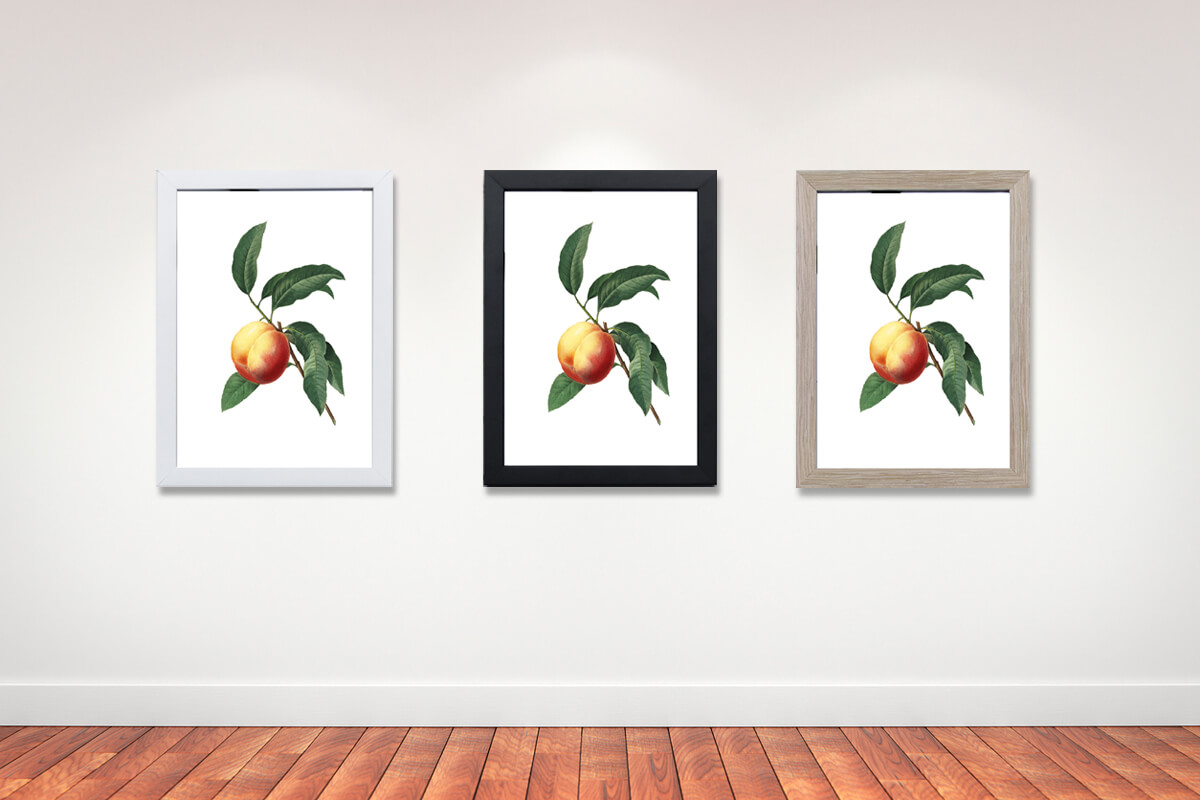
Simple white, black or natural oak coloured profiles are the exhibition standard because they frame the work without competing with it. Choose the one that best suits your medium and palette, then use it across the whole show.
White frames: gallery-clean and bright
White frames disappear into a white gallery wall, letting the artwork float. They suit works on paper, bright or pastel palettes, and illustration.
Black frames: graphic and contemporary
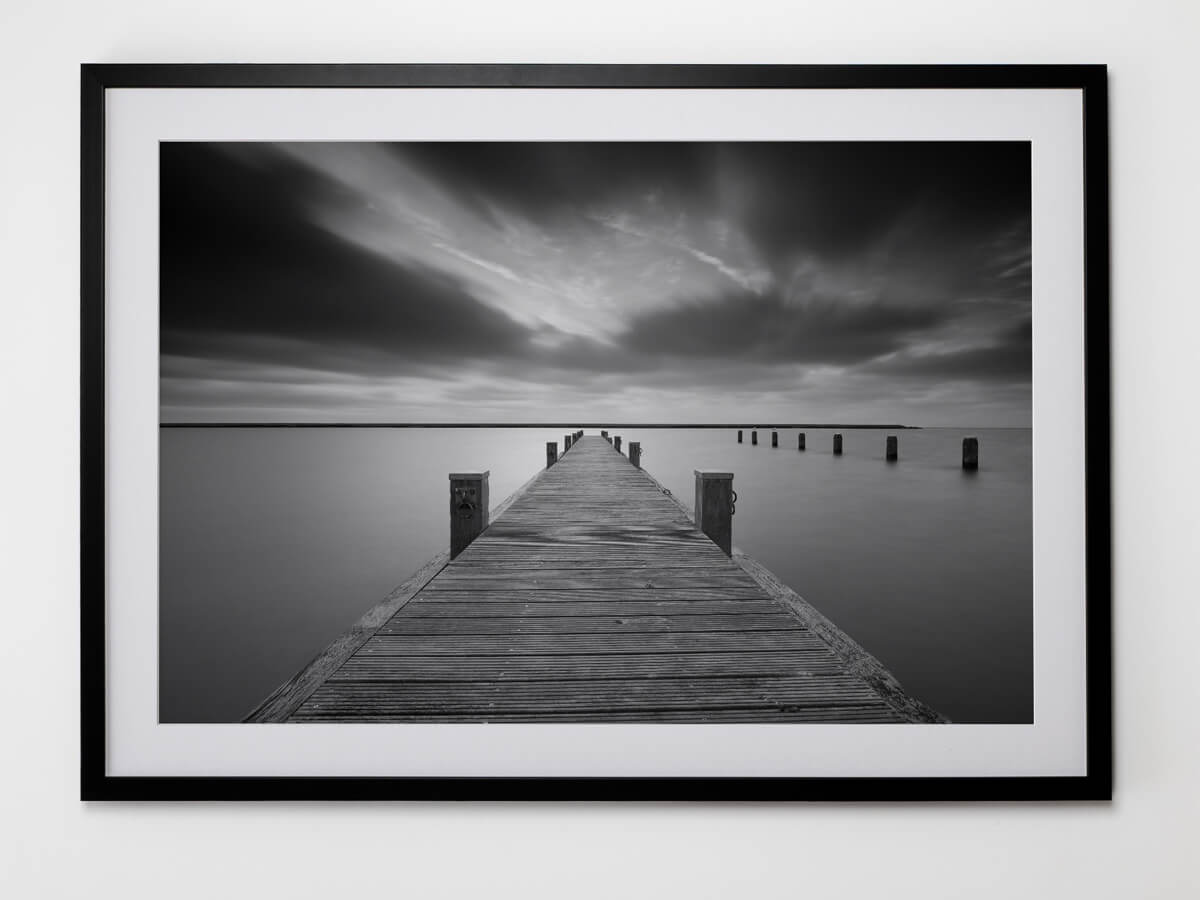
Black frames give a crisp, defined edge and suit photography - especially black-and-white work - along with high-contrast or graphic pieces.
Oak and natural colours: warm and organic
Oak coloured frames add warmth without decoration, working well with earthy palettes, botanical subjects, illustration and mixed media.
Should every piece in the show use the same frame?
In most cases, yes. One profile across the show makes the body of work display as a single collection and keeps the visitor's attention on the art or photography. If your show genuinely has two distinct series, two profiles can work, but keep it to two. For more on matching frame and artwork, read how to choose the right frame colour.
Keep matboard colour and border width consistent
Matboard matters as much as the frame. Use one matboard colour - usually a white or off-white - and keep border widths consistent across each frame size so the wall looks deliberate. Learn more about mat boards, mounts and backing boards.
What glazing should you use for exhibition artwork?
Gallery lighting is bright and directional, so glazing affects how your work displays on the wall. Choose one glazing type for the whole show where possible:
- Clear glass: the most affordable option, fine for most works on paper away from strong light.
- Anti-reflective glass: cuts glare under gallery spotlights and is worth considering for key pieces and darker works.
- UV-protective or museum glass: protects originals from fading and offers the clearest view, ideal for work you expect to sell as a long-term piece.
- Acrylic: lighter and shatter-resistant, practical for large works or shows that travel.
Behind the artwork, acid-free materials protect the piece long after the show ends - see what a backing board does. Our guide to choosing framing glass covers each glazing option in more detail.
How does professional framing help you charge more on opening night?
Buyers pay for certainty. A professionally framed piece is finished, protected and ready to hang the day it goes home, which removes the hesitation - and the hidden cost - of framing it themselves. That supports a higher retail price than the same work sold unframed.
Build framing into your retail price
Treat framing as part of each work's cost. Add the framing cost per piece into your pricing, and check how your venue's commission is calculated; if it applies to the full sale price, build your framing cost in above it so you aren't paying commission on your own framing.
Some artists also offer selected prints or editions unframed at a lower price. That can work well, but keep unframed pieces in a separate browser rack so the hung show stays consistent.
Consistency signals a professional practice
Gallerists, collectors and corporate buyers see consistent presentation as a sign of a serious, organised practice - the kind of artist they want to work with again. Art Society members can also tap into cross-promotion opportunities with Frame Today to help spread the word about their show.
What should artists look for in a framing partner?
For an exhibition, the right framing partner offers three things: (1) the capacity to handle a full show in one order, (2) consistent results across every piece, and (3) qualified framers who will treat original work properly.
Capacity for volume and consistent results
Ask whether your framer can produce the whole show as one batch, use the same moulding and matboard throughout, and commit to a completion date ahead of your installation. With 14 stores across Sydney, Brisbane, Newcastle, the Central Coast, the Hunter Valley and the Southern Highlands, Frame Today makes it easy to drop off and collect close to your studio or venue - find your nearest Frame Today store.
Qualified, accredited framers
Look for framers with recognised credentials. Frame Today's framers are accredited with the Picture Framers Association (PFA) and training in the nationally recognised Certificate III in Picture Framing (MSF30518), covering conservation handling, mat cutting and correct mounting.
Whatever your medium, ask about services that suit your work: canvas stretching for painters, print and frame for photographers and digital artists, and custom framing for originals that need conservation care.
Benefits for working artists - Frame Today Art Society
If you exhibit or sell your work regularly, the Frame Today Art Society is built for you. Members get:
- Framing discounts (currently 30%), applied across your exhibition order
- Discounted digital printing, ideal for photographers and artists producing print editions through our print and frame service
- Collaboration and cross-promotion opportunities, so you can get your work and your show in front of more people
- Plus a range of other member-only perks
Explore Art Society member benefits and sign up today!
Your exhibition framing checklist
- List every work in the show with its exact dimensions.
- Resize or print new work to standard sizes wherever possible.
- Choose one frame profile (white, black or oak) for the whole show.
- Choose one matboard colour and a consistent border width.
- Choose one glazing type, upgrading only key pieces if needed.
- Estimate your total framing budget and build it into retail prices.
- Book a consultation and place the full order 4-6 weeks before opening.
- Arrange collection at least two weeks before installation.
- Check hanging hardware (D-rings and wire) is consistent on every frame.
- Prepare wall labels and a price list that reflect framed pricing.
Ready to plan your exhibition framing?
Bring your list of works into any Frame Today store and our framers will help you choose sizes, a profile and glazing that keep your show consistent, on budget and on time. Book an exhibition framing consultation at your nearest store.