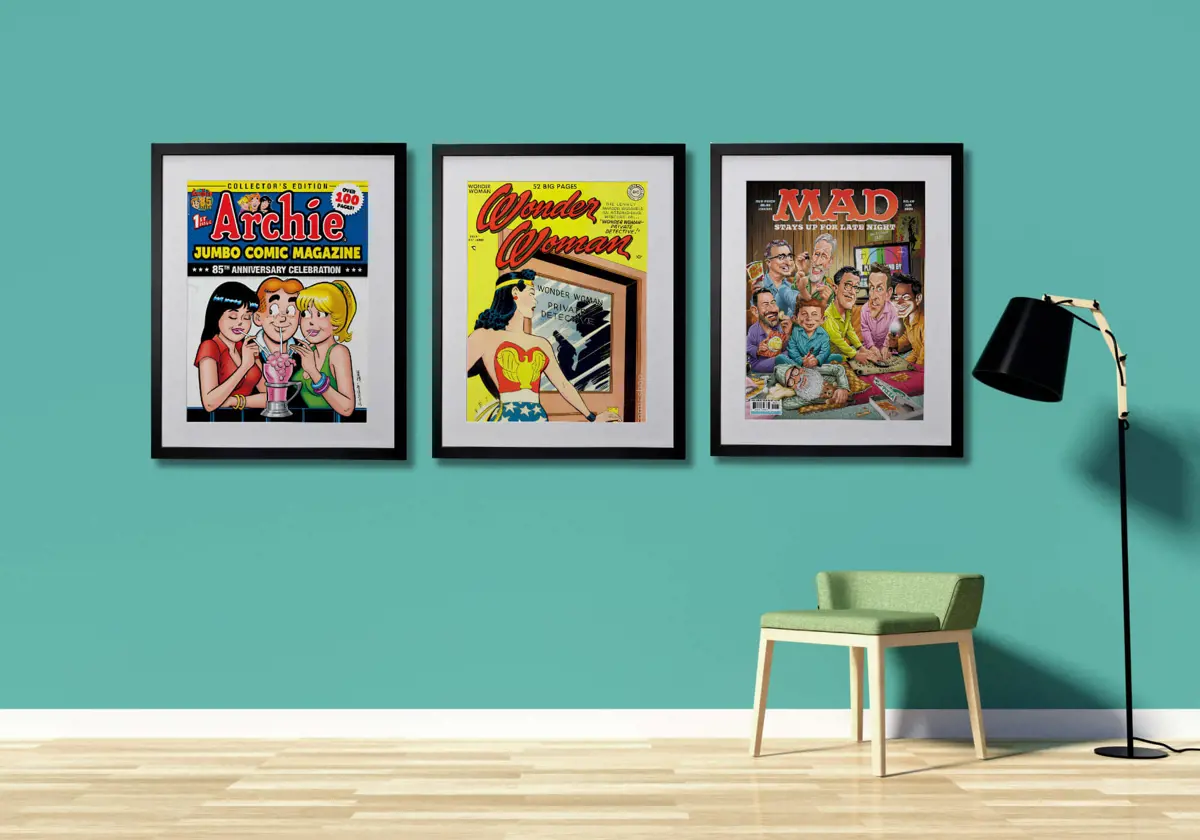
You've done everything right. The CGC 9.8 slab arrived in a padded box, tracked and insured. The 1971 Surfer magazine came from a reputable seller, stored flat, never creased. You've spent real money building a collection, and now you want to actually see it, not leave it in a closet or a filing box.
So you take it to be framed.
Here's the problem: most standard frames - the kind sold at big box stores and even some local frame shops - use backing materials that will slowly, invisibly, and irreversibly damage exactly the kind of paper collectables Australian collectors are pouring money into. Comics, vintage magazine covers, retro video game box art, movie posters… all of it is vulnerable to a threat that has nothing to do with sunlight or handling, and everything to do with what's sitting directly behind the item on your wall.
This guide explains what's actually happening inside a "cheap" frame, why graded comics are surprisingly exposed to it, and what conservation-grade custom framing actually needs to include to protect resale value rather than quietly erode it.
The Hidden Threat - What's Actually in "Cheap" Frame Backing
The core issue is a naturally occurring compound called lignin. Lignin is what gives wood its rigidity, and it's present in large quantities in wood pulp - the base material for standard cardboard, mount board, and the foam-core backing used in most off-the-shelf and budget custom frames.
Lignin is chemically unstable. Over months and years, it oxidises and breaks down, releasing acidic compounds as a by-product. Unlike light damage, which is gradual and often visible as it happens, acid damage works through direct contact and airborne migration. It doesn't need UV exposure to do harm, just time and proximity.
When an acidic mat board or backing board sits directly against (or even near) a comic page or magazine cover, that acid migrates into the paper fibres themselves. The results are well documented in the conservation world:
- Yellowing and browning - most visibly around the edges of the item, sometimes forming a distinct "burn" outline that mirrors the shape of the mat or backing beneath it
- Brittleness - the paper becomes physically weaker and more prone to cracking or tearing at folds and spine creases
- Foxing - small rust-coloured spots caused by a combination of acid, humidity, and mould-like fungal activity
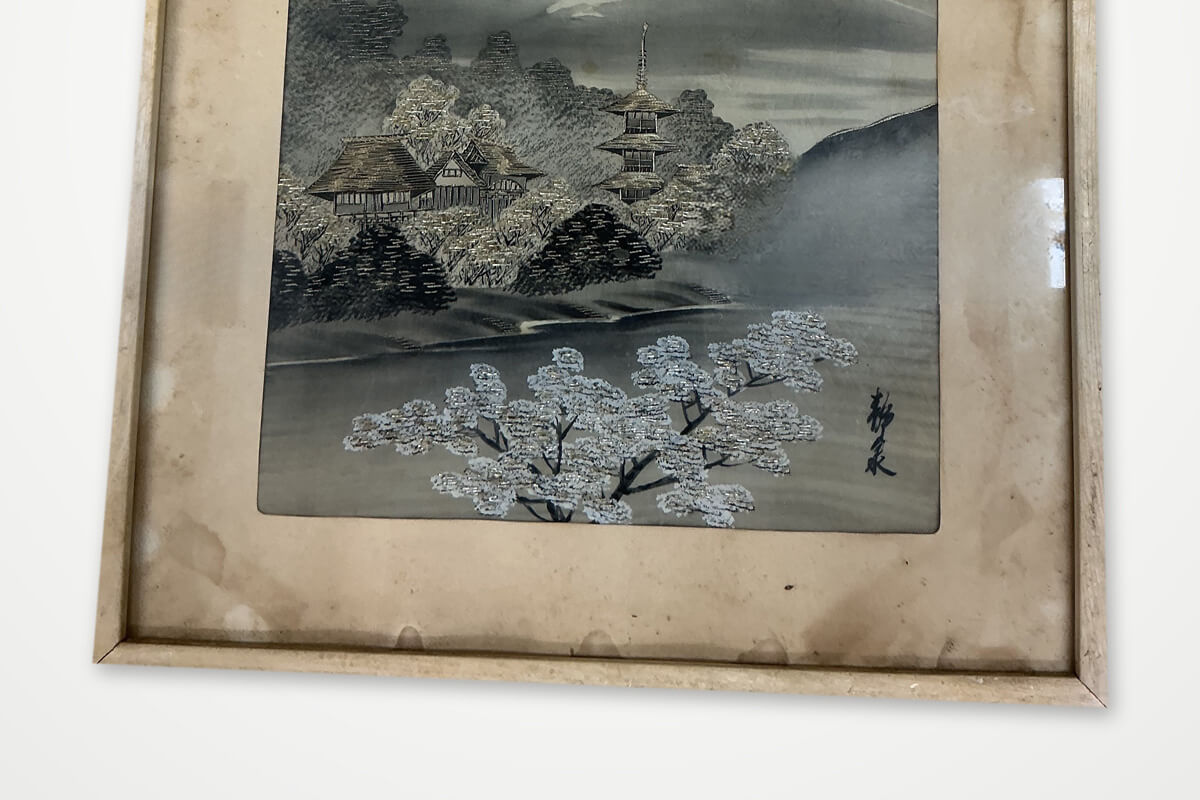
None of this is hypothetical. It's the same chemical process responsible for old newspaper clippings turning brown and crumbling within a few years, while a book printed on high-quality rag paper from the 1800s can still look crisp today. The paper stock used in mainstream comics and mass-market magazines from the 1960s through the 1990s was almost universally wood pulp based - cheap to produce, never intended to last a century, and now sitting inside collections worth thousands of dollars.
Why Graded Comics Are Especially Vulnerable
A common assumption among newer collectors is that a CGC (or PGX, or CBCS) slab solves this problem entirely. It doesn't… not fully, and not in the way most people think.
Slabs aren't sealed vaults. The inner well that holds the comic is designed to prevent handling damage and provide tamper evidence for grading integrity, not to create a hermetically sealed, chemically inert environment forever. Off-gassing from adjacent materials, humidity fluctuations, and the comic's own ageing paper can all still occur inside the case over long timeframes.
The bigger risk shows up when collectors remove a comic from its slab to frame the raw book - a genuinely common move for people who want a more flexible or larger display than a slab allows, or who are framing older, ungraded issues. Once that comic is out of its case, it is fully exposed to whatever is directly behind it. If that backing is standard wood-pulp mount board, the acid migration process starts immediately.
There's also a resale and regrading angle specific to the Australian collector market: a comic that's been reslabbed after sitting in acidic framing for several years can show visible discolouration that simply wasn't there at the original grading date. That's not just an aesthetic loss - it can directly affect the numeric grade on reappraisal, which affects sale price.
The same logic extends to retro video game box art, which is typically printed on similar low-grade cardstock, and to magazine covers, which are often the single most fragile page in the entire issue due to heavier ink coverage and repeated handling before it ever reached a collector's hands.
What "Acid-Free" and "Conservation-Grade" Actually Mean
"Acid-free" gets used loosely in marketing, so it's worth knowing what the terms actually mean when you're choosing materials or asking a framer what they're using.
- Acid-free - the material has a neutral or higher pH at the time of manufacture. This is a reasonable baseline, but it's also a fairly low bar - some acid-free products can still degrade over time if they contain other unstable compounds.
- Lignin-free - the material has had the lignin removed or was never made from wood pulp in the first place (cotton rag products, for example, are naturally lignin-free). This is the more meaningful spec for long-term protection.
- Buffered vs. unbuffered - buffered mat board has an alkaline reserve (usually calcium carbonate) added to actively neutralise acids that migrate in from the environment or the artwork itself. This sounds like an upgrade, but it isn't always. Buffering can react poorly with certain inks, dyes, and photographic materials. For most standard comic and magazine paper it's fine and often recommended, but it's a detail worth discussing rather than assuming.
- Conservation-grade / museum-grade - the top tier, typically 100% cotton rag mat board with no wood pulp content at all, paired with UV-filtering or museum glass.
That last point matters because acid damage and light damage are two separate mechanisms. A UV-filtering glazing protects against fading and colour shift from sunlight and indoor lighting, but it does nothing to stop acid migrating from the backing board. A genuinely protective framing setup needs to address both.
How to Frame a Comic, Magazine, or Game Box Without Devaluing It
Getting this right comes down to a handful of specific techniques:
Floating mounts over adhesives. The item should never be taped, glued, or dry-mounted directly to a backing board. Archival corners, photo corners, or a fully floating mount (using inert polyester film strips or hinges) allow the piece to be held securely and removed later without any residue or damage. Reversibility is a core conservation principle - nothing about the framing process should be permanent.
Spacers to prevent glass contact. Paper that touches glass directly can stick to it over time, especially in humid conditions, and any condensation inside the frame will sit right against the surface. A proper mat or spacer keeps a small air gap between the item and the glazing.
Shadow-box depth for graded slabs. If you want to display a comic while it's still in its CGC case (generally the safer option if resale as a graded book is the goal), it needs a frame with enough depth to house the slab without pressure on the case, plus a way to secure it so it doesn't shift or rattle.
Climate awareness for Australian conditions. Coastal humidity across much of Australia's east coast accelerates both mould risk and the rate of acid migration. A well-sealed frame back (not airtight, but resistant to dust and moisture ingress) matters more here than it might in a drier climate.
Common Mistakes That Quietly Devalue a Collection
- Tape or adhesive mounting - even "removable" tape can leave residue or tear paper on removal, and the adhesive itself often carries its own acidic compounds
- Standard glass instead of UV-filtering or museum glass - cover art and coloured ink can visibly fade within a few years under normal window or halogen light exposure
- Foam-core or standard cardboard backing - the most common issue, and often invisible until the frame is opened years later and the damage is already done
- Sealing without a moisture strategy - trapping humidity inside a frame is often worse than leaving it slightly less sealed
How Frame Today Approaches Comic & Magazine Preservation
At Frame Today, conservation framing for collectables isn't an add-on - it's built into how we handle high-value paper items from the start. That means acid-free, lignin-free matting as standard for comics, magazine covers, and game box art, UV-filtering glazing options, and mounting methods chosen specifically to be reversible, so your collection is never permanently altered by the framing process.
Every frame we produce is backed by our lifetime guarantee - which matters more, not less, when the item behind the glass is appreciating in value rather than just decorative.
If you're framing a graded slab, a raw vintage issue, or a magazine cover you don't want to lose to yellowing, it's worth a conversation before you choose materials. Get in touch with the Frame Today team for a consultation tailored to protecting the resale value of what you're framing.
The Bottom Line
Conservation-grade framing costs more upfront than a standard frame job - there's no getting around that. But for a collection that's meant to hold or grow in value, it's not really an added cost. It's the difference between framing being a way to protect and display an asset, or the single event that quietly reduces its value. For anything you'd hesitate to replace, the acid-free option isn't the premium choice. It's the only one that makes sense.
ave a graded comic, vintage magazine, or retro game box you're looking to frame? Get in touch with Frame Today and speak with a qualified framer for advice on protecting its value before you commit to a frame.