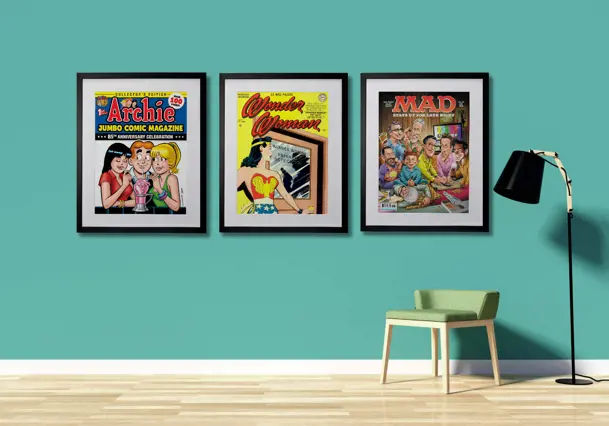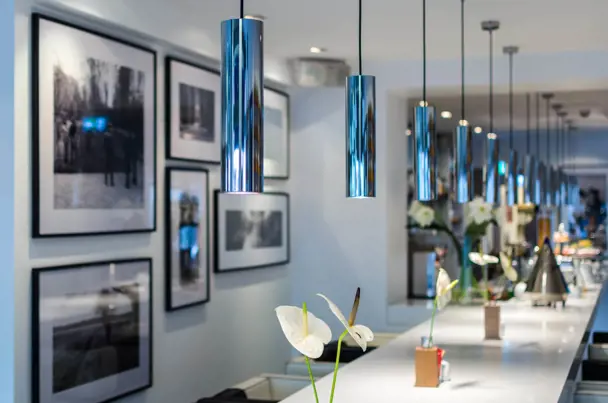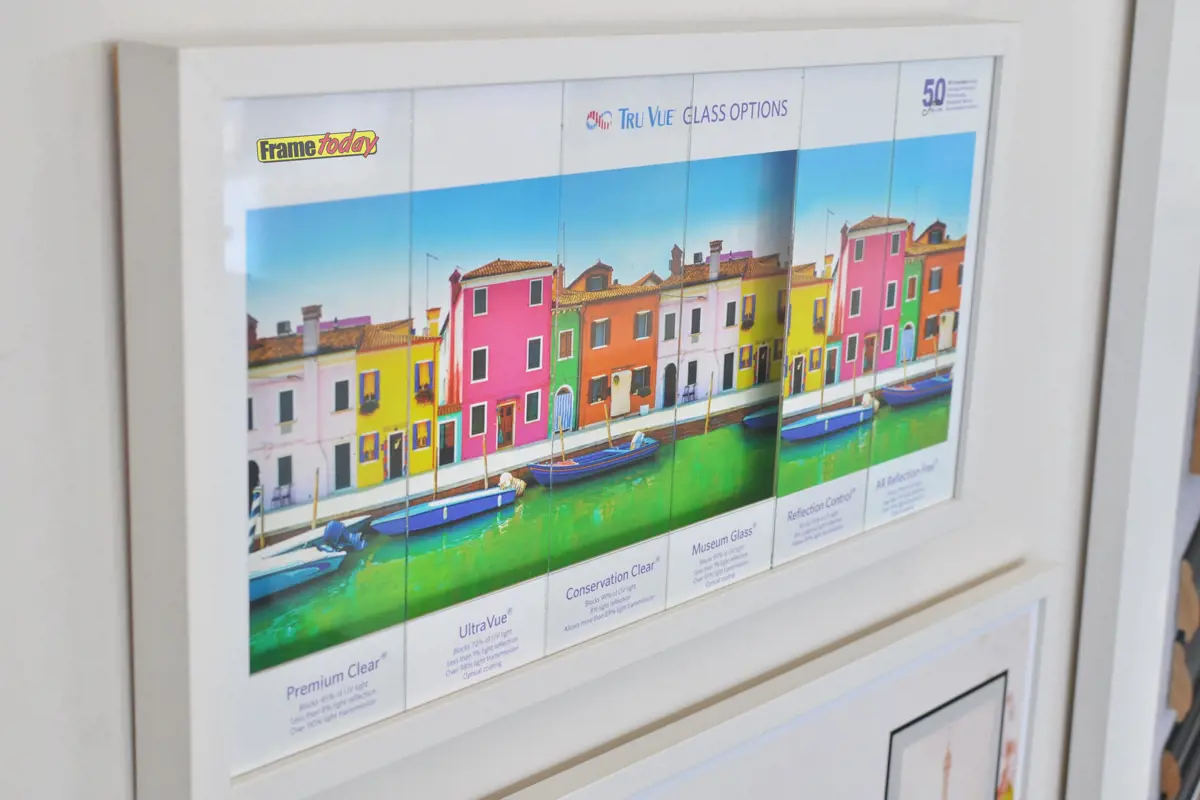
You have spent time selecting the perfect piece of art, finding the right timber frame, and carefully hanging it above your sofa. But as soon as you turn on the lounge room lamps or open the blinds on a sunny afternoon, your artwork disappears behind a wall of glare. Instead of admiring fine detail or rich colour, you are staring at the reflection of your own windows.
If glare is ruining your view, you are not alone. It is one of the most common frustration points Australian homeowners face when displaying framed art. But what causes this mirror-like effect, and is upgrading to anti-reflective glass actually worth it?
The Living Room Dilemma - Why Can’t You See Your Art?
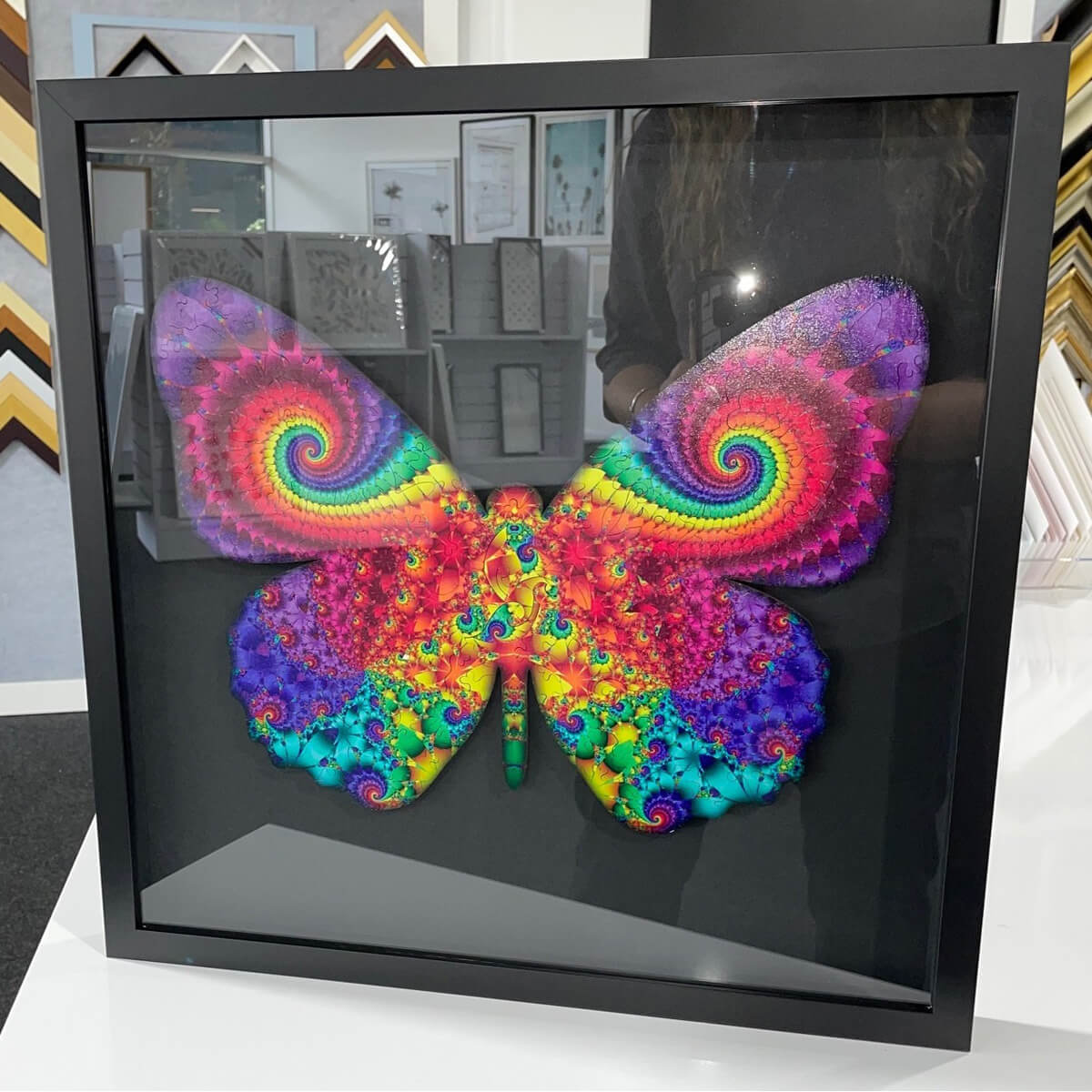
Standard picture framing glass, often referred to as clear float glass, is smooth and highly reflective. Under everyday ambient light, standard float glass acts like a mirror. Downlights, table lamps, and natural sunlight bounce straight off the surface and hit your eyes, washing out fine details and obscuring contrast.
If you have ever had to stand at an awkward angle just to see a framed photo or print without a hotspot blinding you, standard glass is the culprit.
The Physics of Glare - What Light Is Doing on Standard Glass
To understand why ordinary glass frustrates framed art displays, it helps to look at how light behaves when it hits a basic frame:
- Substrate green tint: Standard float glass contains iron contaminants. This gives the glass a subtle greenish cast that dulls crisp whites, alters delicate tones, and reduces overall contrast.
- Double-sided bounce: Standard glass has two smooth surfaces. Light bounces off both the front face and the back face, multiplying the reflections you see.
- Total light loss: Because standard glass bounces so much light away, less light actually reaches the artwork inside. Fine textures, deep blacks, and dark shadow details end up looking flat and muddy under indoor lighting.
The Technical Fix - How Magnetron Sputtered Coatings Work
Anti-reflective picture framing glass solves this problem through optical science rather than surface etching. Instead of using textured or non-glare "matte" glass - which scatters light but creates a fuzzy, hazy viewing effect - anti-reflective glazing relies on advanced coating technology.
Water White Base
Rather than starting with standard green-tinted float glass, premium anti-reflective glazing such as Water White Museum Glass, uses low-iron Water White glass. Removing the iron content eliminates the green cast, ensuring crystal-clear colour transmission that lets the true hues of your art shine through.
Magnetron Sputtered Coatings
Using a process called magnetron sputtering, an invisible optical coating is applied to both sides of the glass sheet.
Disrupting Light Waves
These ultra-thin, double-sided optical coatings alter how light energy behaves when hitting the surface:
- Reflections are virtually eliminated: Surface reflection drops from ordinary levels down to less than 1%.
- Maximum light transmission: Over 98.5% of light passes straight through to the artwork.
The result is what custom picture framers often refer to as "invisible glass." The barrier vanishes, making your artwork look like it isn’t behind glass at all.
Performance Breakdown - UltraVue® UV70 vs. Museum Glass®
When choosing anti-reflective glazing, understanding your artwork’s protection needs helps determine the best fit for your space.
Tru Vue UltraVue® UV70 Glass
UltraVue® UV70 combines incredible clarity with entry-to-mid-level light protection:
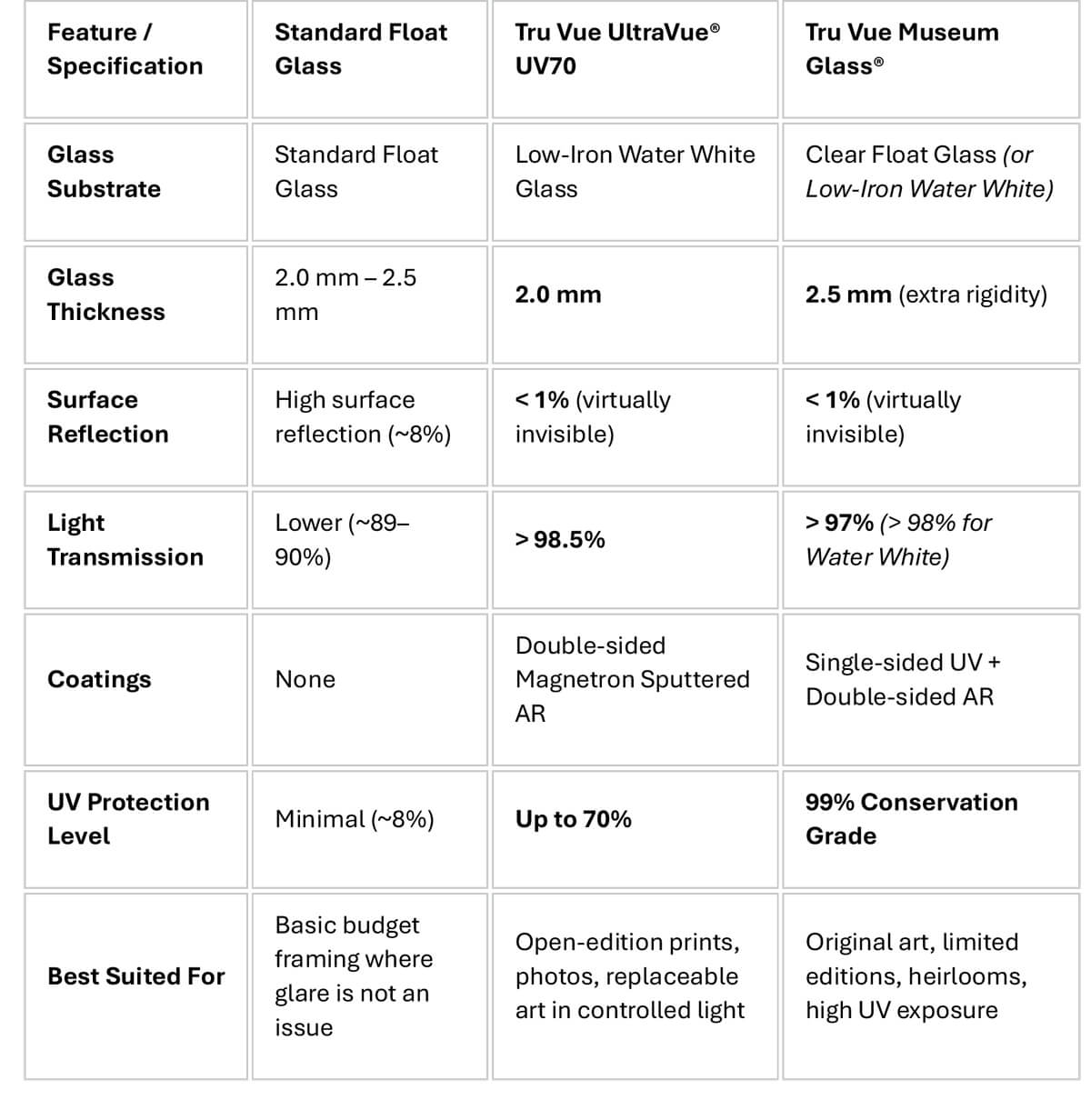
- Clarity: Built on a low-iron Water White substrate with double-sided magnetron sputtered anti-reflective coating providing 98.5% light transmission and under 1% reflection.
- UV protection: Filters up to 70% of UV rays (300–380 nm).
- Best suited for: Open-edition prints, family photos, decorative posters, and easily replaceable artwork hung in controlled lighting environments where reflection control is the top priority.
Tru Vue Museum Glass®
Museum Glass® represents the gold standard in custom picture framing:
- Clarity: Delivers the exact same ultra-low reflection (<1%) and 97% light transmission.
- UV conservation: Blocks up to 99% of UV rays (300–380 nm).
- Best suited for: Original paintings, limited-edition prints, historical documents, fine art photographs, and sentimental heirlooms vulnerable to fading or yellowing from sunlight and indoor UV exposure.
Clear Upgrades - Premium Anti-Reflective Glass vs. Standard Float Glass
Upgrading from standard clear float glass to a double-sided anti-reflective option delivers noticeable visual improvements:
- True-to-life colour accuracy: Removing iron contaminants eliminates the green tint, revealing vibrant colours, crisp whites, and deep blacks.
- Unmatched viewing clarity: Boosting light transmission to over 98.5% in UltraVue® UV70 makes dark scenes and fine line work easily viewable from any angle in the room.
- Smarter light protection: Built-in UV filtering of up to 70% in UltraVue® UV70 and up to 99% in Museum, helps slow down light-induced fading compared to standard glass.
- Durable surface care: Engineered with a permanently bonded optical coating designed for enhanced scratch resistance and easy routine cleaning.
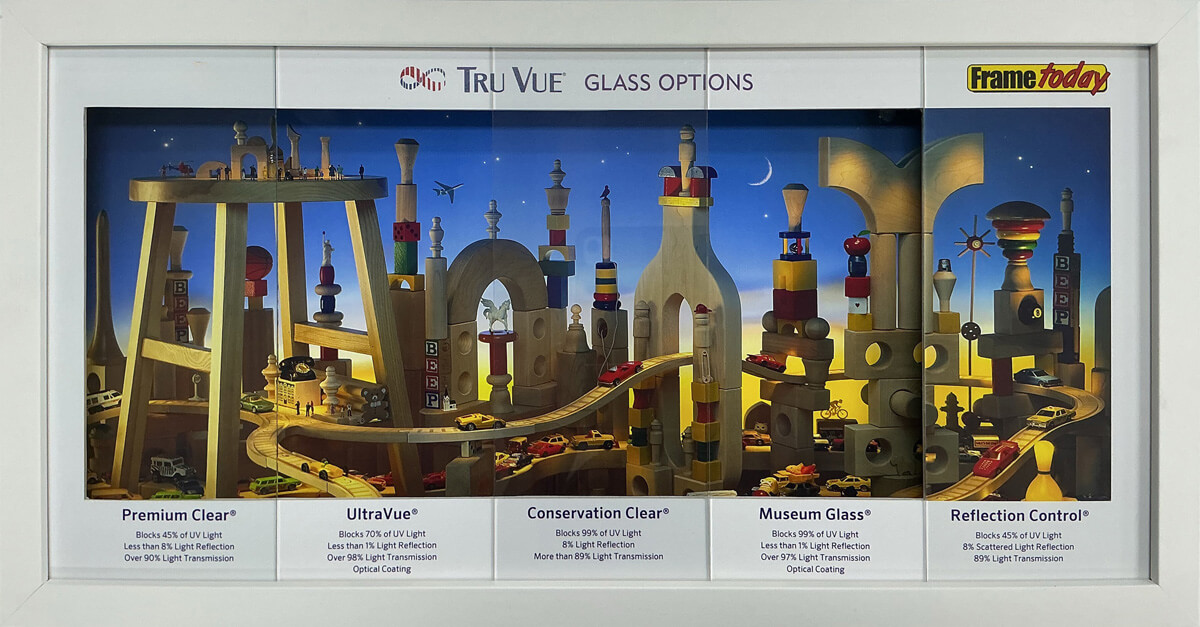
Picture Framing Glass Comparison
Summary - Making the Right Choice for Your Framing Job
We often get asked; Is anti-reflective glass worth it? If your artwork hangs in a room with windows, downlights, or ambient lamps, the difference in display quality is night and day.
For decorative pieces and photos where eliminating glare is your main goal, UltraVue® UV70 Glass offers an extraordinary jump in visual clarity. For valuable originals, irreplaceable heirlooms, or pieces exposed to bright sunlight, upgrading to Tru Vue Museum Glass® gives you that same invisible clarity alongside 99% conservation protection.
If you are unsure which glass option suits your next custom framing project, bring your artwork into your local custom framing store. Experiencing the visual difference under real showroom lighting makes choosing the right glass simple.