A Gift with Salt, Ink and Story
Every now and then a project swims in that reminds us why we frame; to protect stories and present them beautifully.
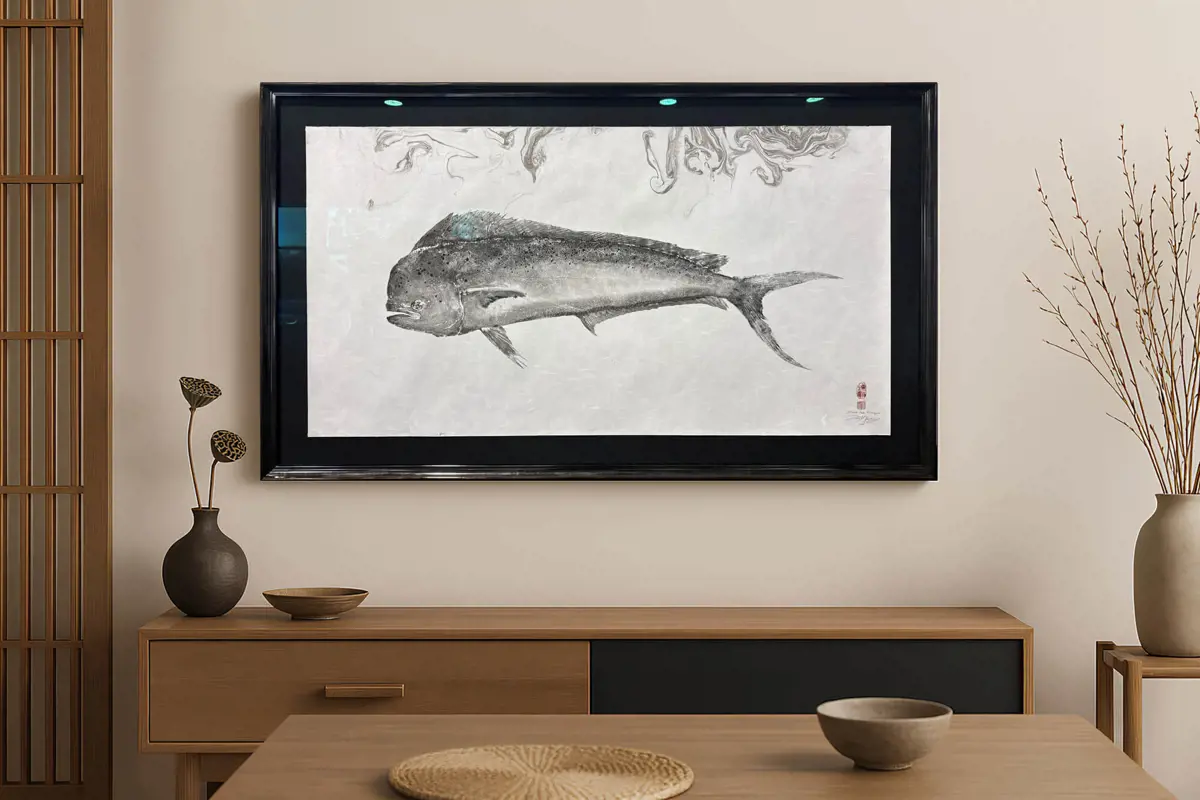
A customer came to our Fortitude Valley framing store with a commission by @dwighthwang_gyotaku - a traditional gyotaku print of a dorado (mahi‑mahi), her husband’s favourite fish. She wanted the piece to feel alive; the glimmer of scales, the suggestion of current, and the quiet reverence of a centuries‑old technique captured in sumi ink on delicate washi paper.
The challenge? The print was very large and extremely thin, and we wanted it to float in a shadowbox so the paper’s deckled edges and natural movement stayed visible.
Here’s how we brought it to life.
What Is Gyotaku?
Gyotaku (魚拓) originated in mid-1800s Japan as a way for anglers to record their prized catches. Sumi ink is brushed directly onto the fresh fish, which is then pressed against washi paper to create a highly detailed “fossil‑like” impression - the scales, fins, and texture are all there, captured in a single, honest print. There’s something wonderfully respectful about it; a portrait of the fish that honours both nature and craft.
Dwight Hwang’s dorado print came with those unmistakable swirls of ink across the top, like currents or wind eddies, so our design choices leaned into that movement and texture.
Design Choices That Echo the Ocean
Leon Black Frame (marbled, metallic, scale‑like)
We selected the Leon Black frame for its subtle marbled sheen which catches light like scales. The profile is strong without being heavy, giving the large artwork presence while keeping the focus on the fish. From certain angles, the metallic finish introduces a gentle glimmer that feels right at home with gyotaku’s natural textures.
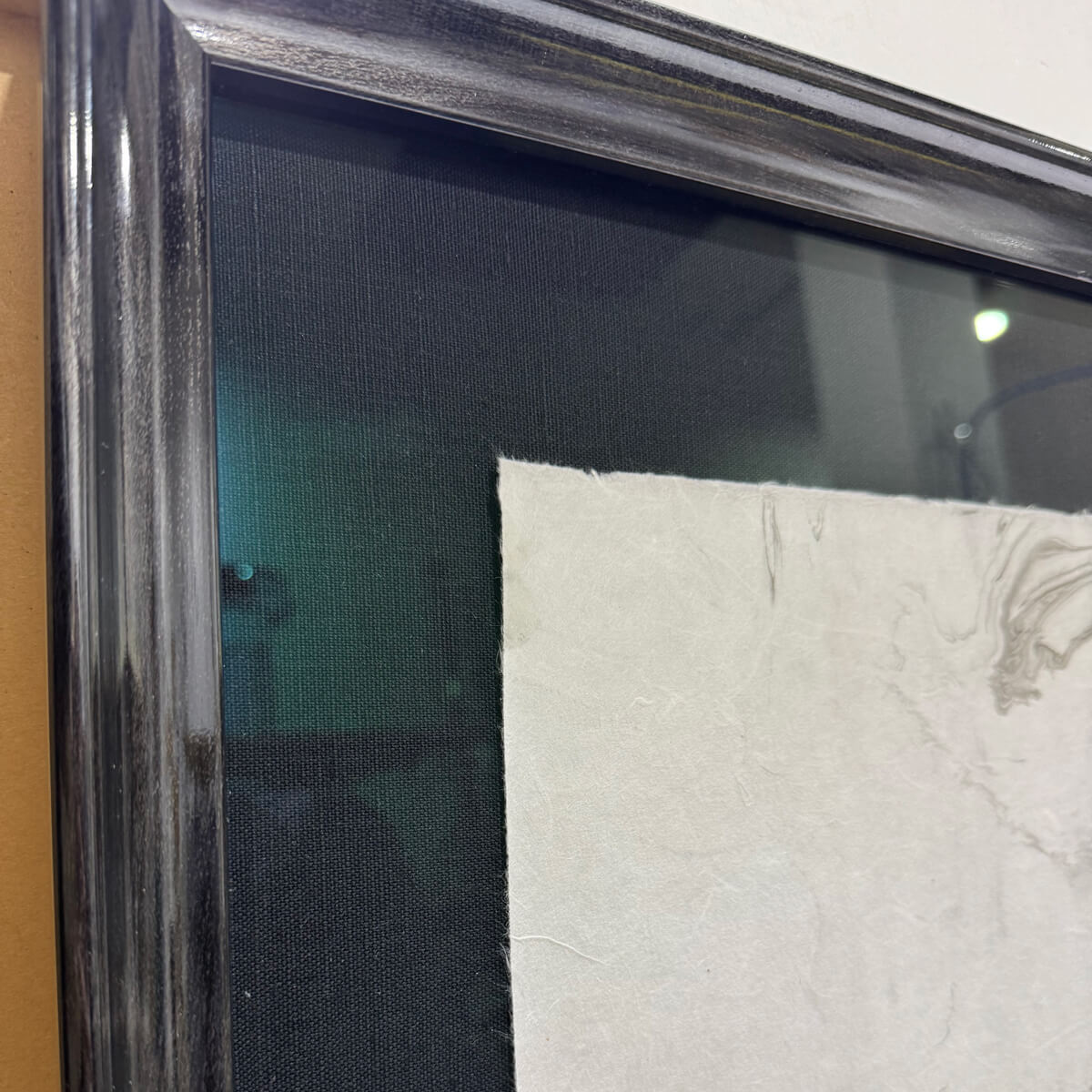
Black Shadow Linen Mat (texture like gills)
For the mount, we chose Black Shadow, a real linen matboard. The fabric weave is reminiscent of fish gills - subtle, organic, and tactile. Against the warm off‑white washi, the deep black linen creates dramatic contrast and helps the print visually “lift” from the background.
Tru Vue Ultra Vue Glass (clarity without the glare)
Given the fine ink lines and soft tonal shifts, we used Tru Vue Ultra Vue glazing. It reduces reflections and enhances clarity, so you see the delicate paper fibres, the subtlest fades of sumi, and the dorado’s silhouette with minimal visual interference.
Built-In Pack-Out (shadowbox frame depth)
We constructed a shadowbox pack-out so the print can float with space around and in front of it. This prevents the paper from pressing against the glass and allows a beautiful shadow line to form around the edges - an effect that accentuates the float and celebrates the irregularities of handmade washi.
The Framing Challenge: Floating Ultra‑Thin Washi at Scale
Floating a small print is one thing. Floating a very large piece of ultra‑thin washi is another. Traditional mounting can show tape lines or adhesive marks through translucent paper - especially under strong, directional light. We wanted a mounting method that was reversible, supportive, and invisible.
The Flush Float Method
We used a Flush Float technique; a series of small, well‑spaced hinges positioned around the perimeter of the artwork. Each hinge is hidden just behind the edge of the print so no tape lines show through to the front. The many hinges distribute support evenly, keeping the print stable across a large area without creating hard points of tension.
It’s meticulous work; measuring, spacing, testing, and working in unison, so the paper lies naturally, with just a touch of movement that keeps it looking alive.
Collaboration, Care and Craft
On a job this size, four steady hands really help. Danni and Eloise worked together to prepare the hinges, align the print, and finesse the float depth. They checked for paper memory, ink stability, and potential shadowing before committing. The final assembly is calm and minimal… exactly how gyotaku should feel.
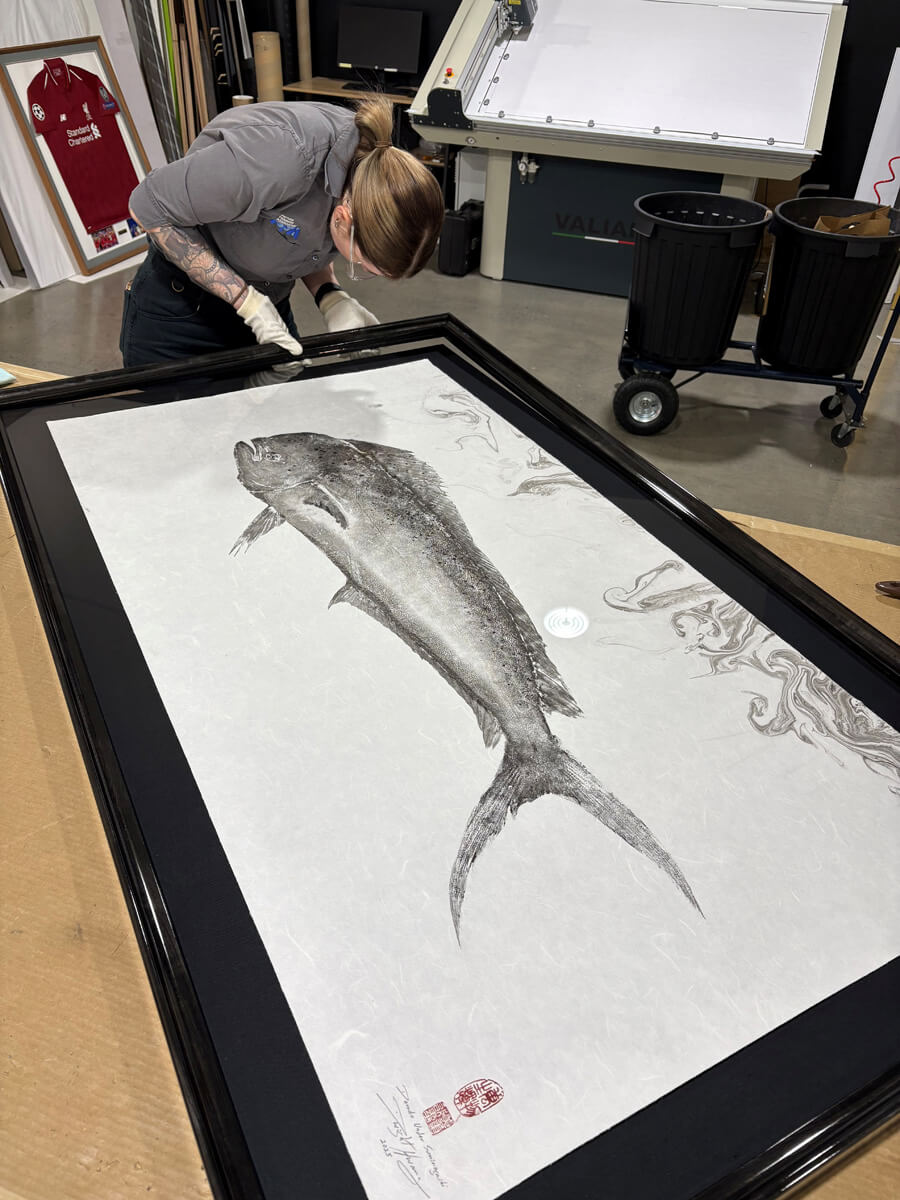
The Final Result
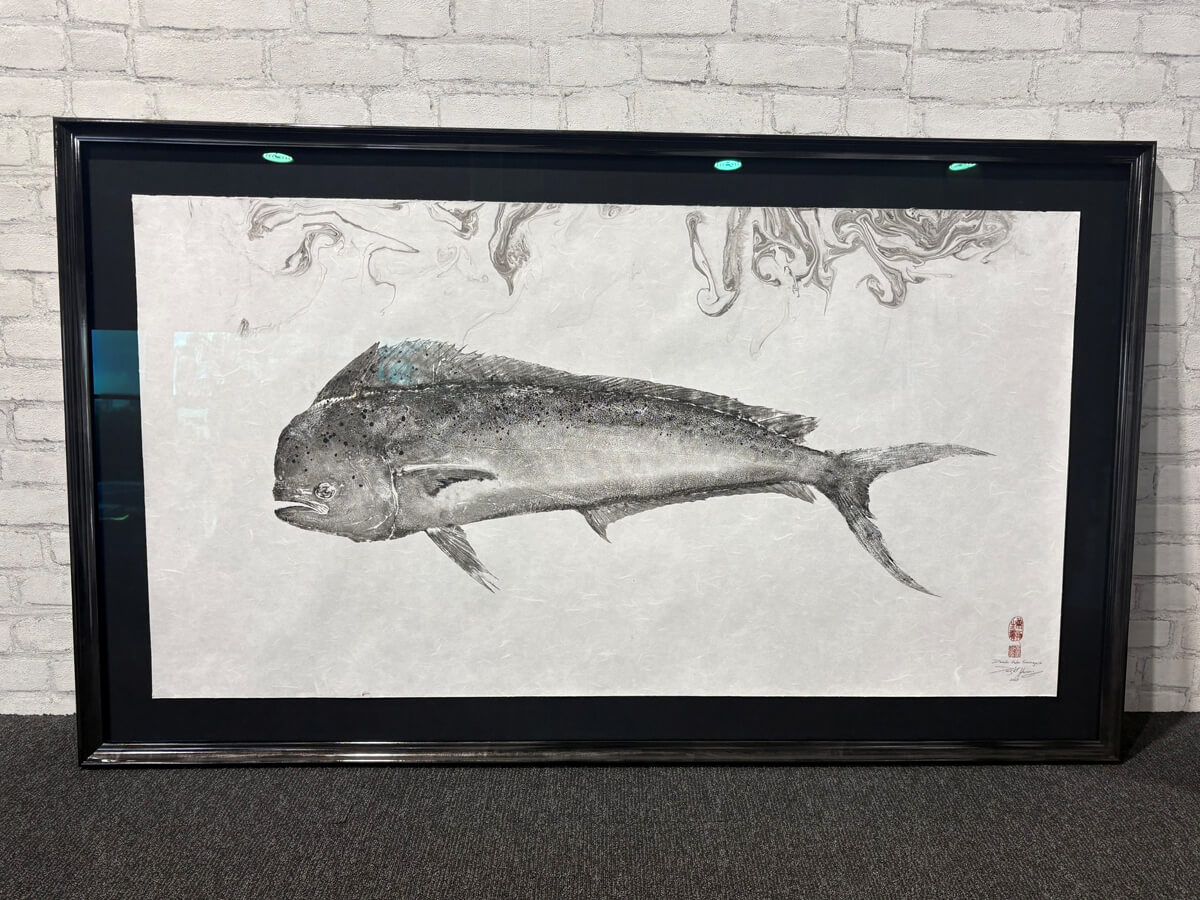
The dorado now “floats” within a deep black field, its silhouette crisp against linen, with just enough depth to cast a subtle shadow around the paper’s natural edges. The Leon frame catches light like a wet shoreline; the Ultra Vue glass keeps the focus on ink and fibre, not reflections. The swirling sumi across the top of the print finds an elegant echo in the frame’s marbled finish.
It feels nautical without being literal. Modern without losing its craft. A gift with soul.
Why Specialist Mounting Matters for Gyotaku (and Other Delicate Works)
- Reversible, conservation‑minded methods protect the artwork for the long term.
- Even perimeter support prevents stress points and rippling in thin papers.
- Shadowbox spacing avoids glass contact and adds depth that enhances the float.
- Premium glazing ensures the fine nuances of hand‑inked prints remain visible in changing light.
Whether it’s gyotaku, calligraphy, antique maps, fashion textiles, or deckled fine‑art papers - the right technique makes all the difference.
Bring Us Your Story
If you have a delicate or unusually sized artwork you’d like to showcase - especially pieces with texture, movement or sentimental value - we’d love to help.
Visit us at Frame Today for a free design consultation. Bring the piece in, and we’ll explore framing options that respect the medium and enhance the item’s story.
Quick Specs (for fellow framing aficionados)
- Artwork: Traditional gyotaku dorado by @dwighthwang_gyotaku
- Mounting: Flush Float perimeter hinge method
- Matboard: Black Shadow (real linen)
- Frame: Leon Black (marbled/metallic finish)
- Glazing: Tru Vue Ultra Vue (clarity + reduced reflection)
- Build: Shadowbox pack-out to create depth and create the floating look.