A beautifully curated gallery wall can instantly transform an empty room into a sophisticated focal point. However, without a clear structural framework, a collection of framed art can quickly look chaotic, cluttered, and poorly executed.
Styling a gallery wall is an art form rooted in precise geometry and visual balance. Whether you are displaying family photographs, fine art prints, or a mix of eclectic memorabilia, using a professional styling formula ensures your picture frames look cohesive, intentional, and balanced.
The Golden Rules of Gallery Wall Geometry
Before selecting your frames, you must understand the core metrics that interior designers and professional framers use to ensure visual harmony:
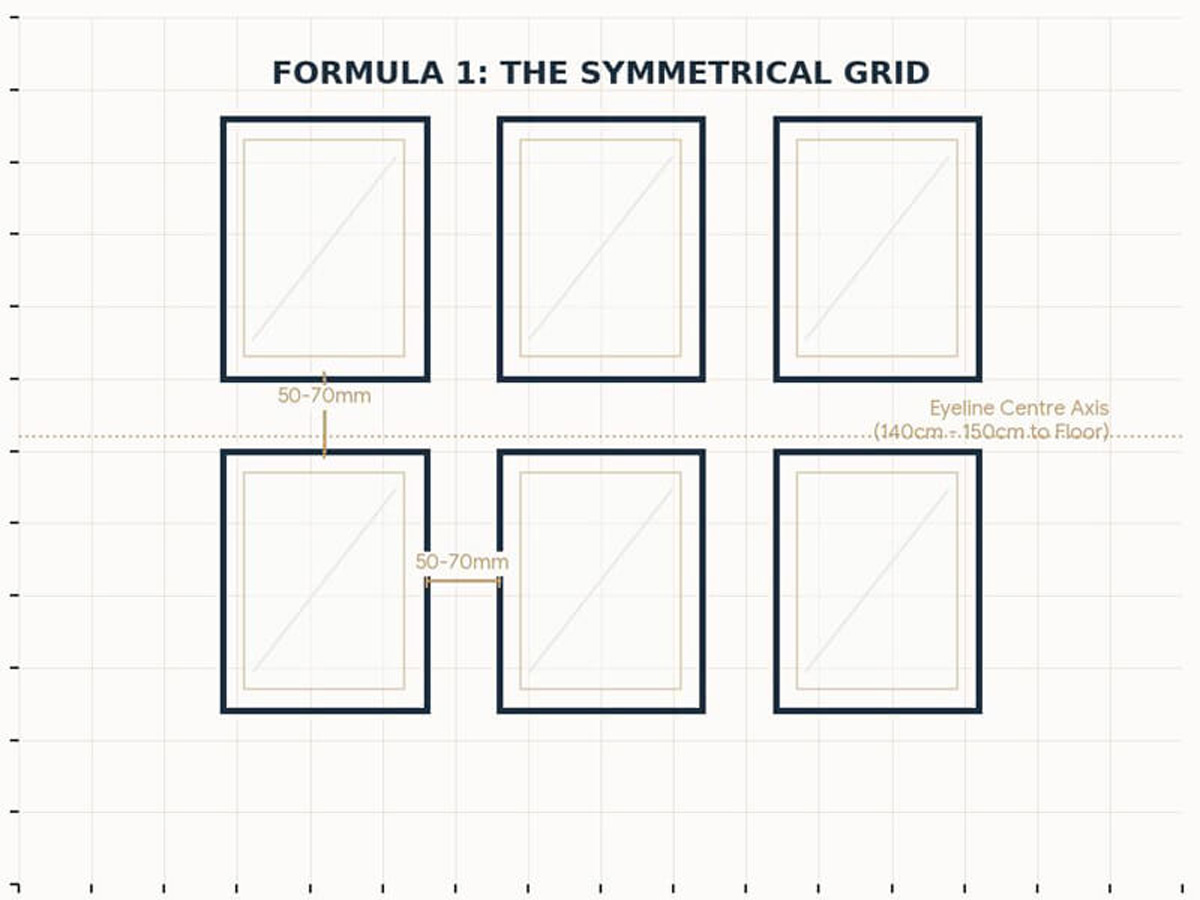
- The Eyeline Standard: The vertical centre of your overall gallery wall display (or the centre of your primary focal piece) should sit at standard gallery eyeline height - exactly 140cm to 150cm from the floor.
- The Spacing Index: Consistency is what separates professional gallery walls from amateur ones. Maintain a strict 50mm to 70mm gap between frames for standard-sized walls, or up to 100mm for massive, double-height spaces.
- The Furniture Anchor: If hanging a gallery wall above a sofa, sideboard, or bedhead, the bottom edges of the lowest frames should sit 15cm to 20cm above the furniture to prevent the display from feeling detached from the room.
📐The Subconscious Science of Balance
Ever wondered why some gallery walls instantly look like they belong in a premium modern space, while others just feel a bit cluttered? It usually comes down to a hidden design cheat code: The Golden Ratio.
For centuries, master artists, architects, and designers have relied on this mathematical proportion (1:1.618) because the human brain is naturally hardwired to find it incredibly comforting and beautiful.
You don't need a calculator to use it on your walls. Here is how professional stylists translate high science into effortless framing rules:
- The 60/40 wall rule: Look at your target wall space as a single canvas. For the ultimate visual harmony, aim for your framed art to occupy roughly 60% of the area, leaving 40% as open, negative space. Exceeding 60% can make a room feel cramped; dropping too far below 40% makes your collection look lost.
- The off-centre "anchor": When building an organic layout (like a central cluster discussed below), avoid placing your largest focal frame dead-centre. Instead, shift it slightly off-centre - about two-thirds of the way across your layout's total width. This naturally guides the viewer's eye through the collection rather than trapping it in the middle.
- Proportional scaling: If you are mixing frame sizes, try pairing pieces where the larger frame is roughly 1.5 to 1.6 times the size of the smaller companion frame (for example, pairing a smaller statement artwork alongside a larger focal piece). The sizes will instantly click.
Takeaway: You don't need absolute symmetry to achieve perfect balance. By giving the eye the right mix of framed art and breathing room, even the most eclectic gallery wall will look intentional, curated, and effortlessly high-end.
Four Proven Gallery Wall Layout Formulas
Depending on your personal interior style and the types of art you own, choose one of these four structural formulas to anchor your design:
1. The Symmetrical Grid
- Style: Modern, minimalist, and architectural.
- How it works: This layout uses identical frame sizes, matching matboard widths, and perfectly uniform spacing. It is ideal for a series of botanical prints, black-and-white architectural photography, or minimalist line art.
- Pro Tip: This formula requires absolute millimetre-precision when hanging. A deviation of even 5mm will ruin the visual effect.
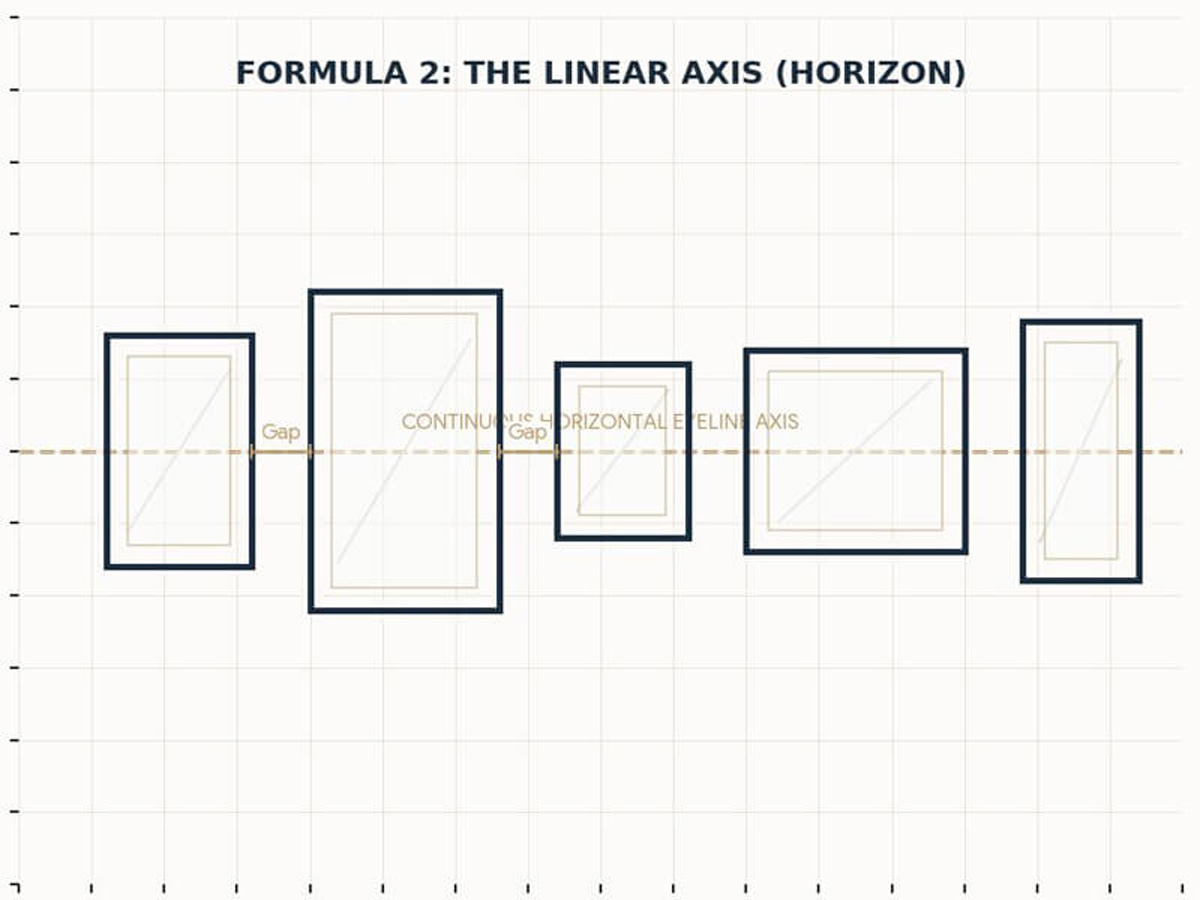
2. The Linear Axis (Horizon)
- Style: Clean, ordered, yet visually dynamic.
- How it works: Draw an imaginary horizontal line across your wall at eyeline height. Align either the top edges, bottom edges, or exact centre points of all your frames along this single axis.
- Best For: Rooms with long hallways, open-plan dining spaces, or walls sitting above low-profile furniture.
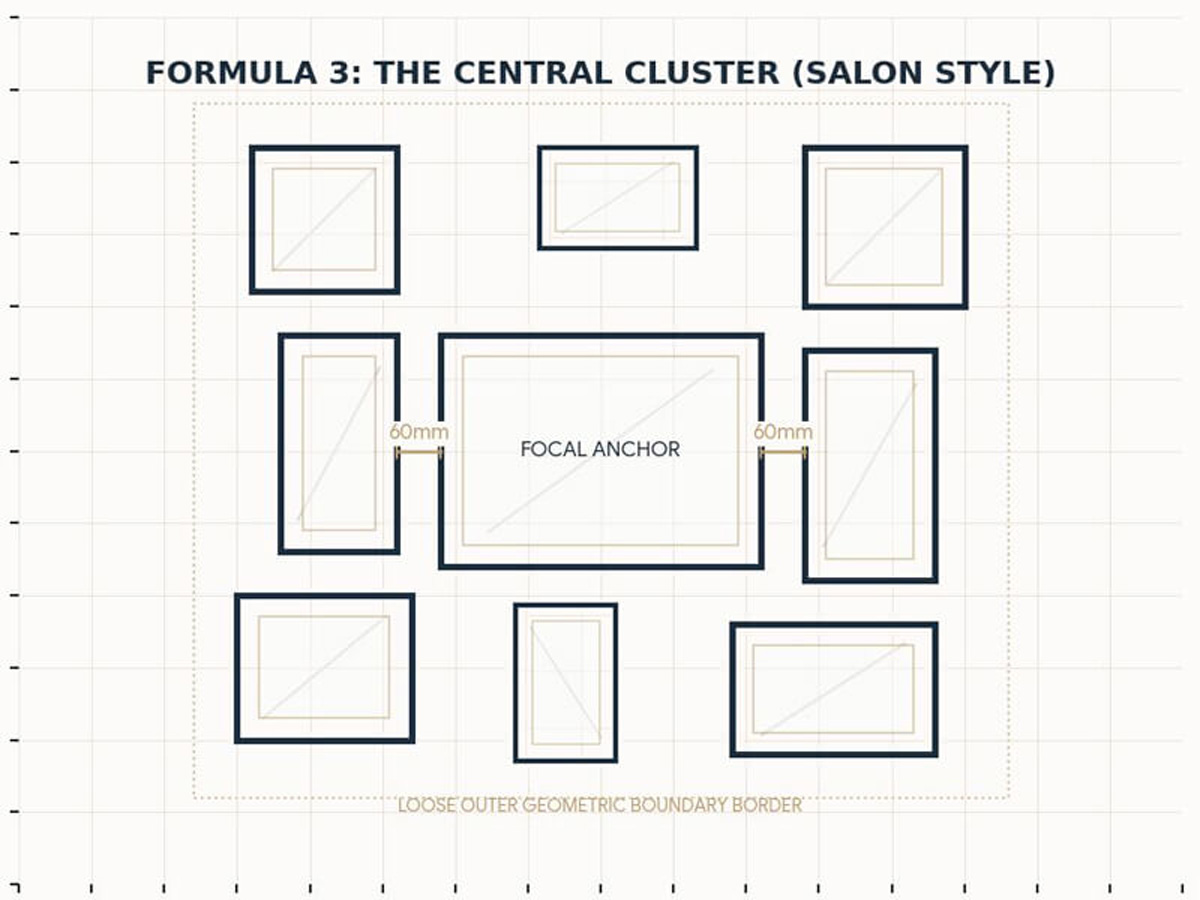
3. The Central Cluster (Salon Style)
- Style: Eclectic, organic, and narrative driven.
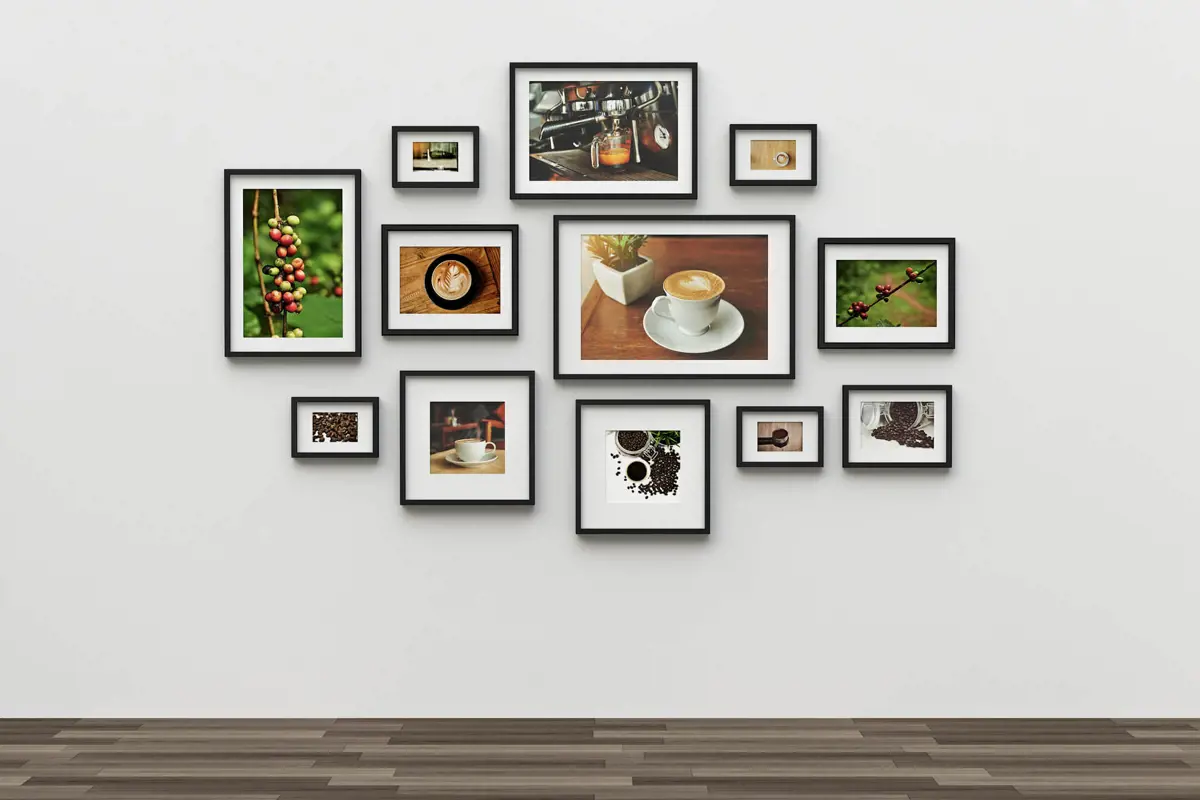
- How it works: Anchor the display with one large, dominant piece of artwork positioned slightly off-centre at eyeline height. From there, expand outwards organically using smaller frames, keeping your spacing gaps consistent (e.g., exactly 60mm apart) to tie the varied sizes together.
- Best For: Mixing varied art mediums, oil paintings, sketches, and dimensional objects.
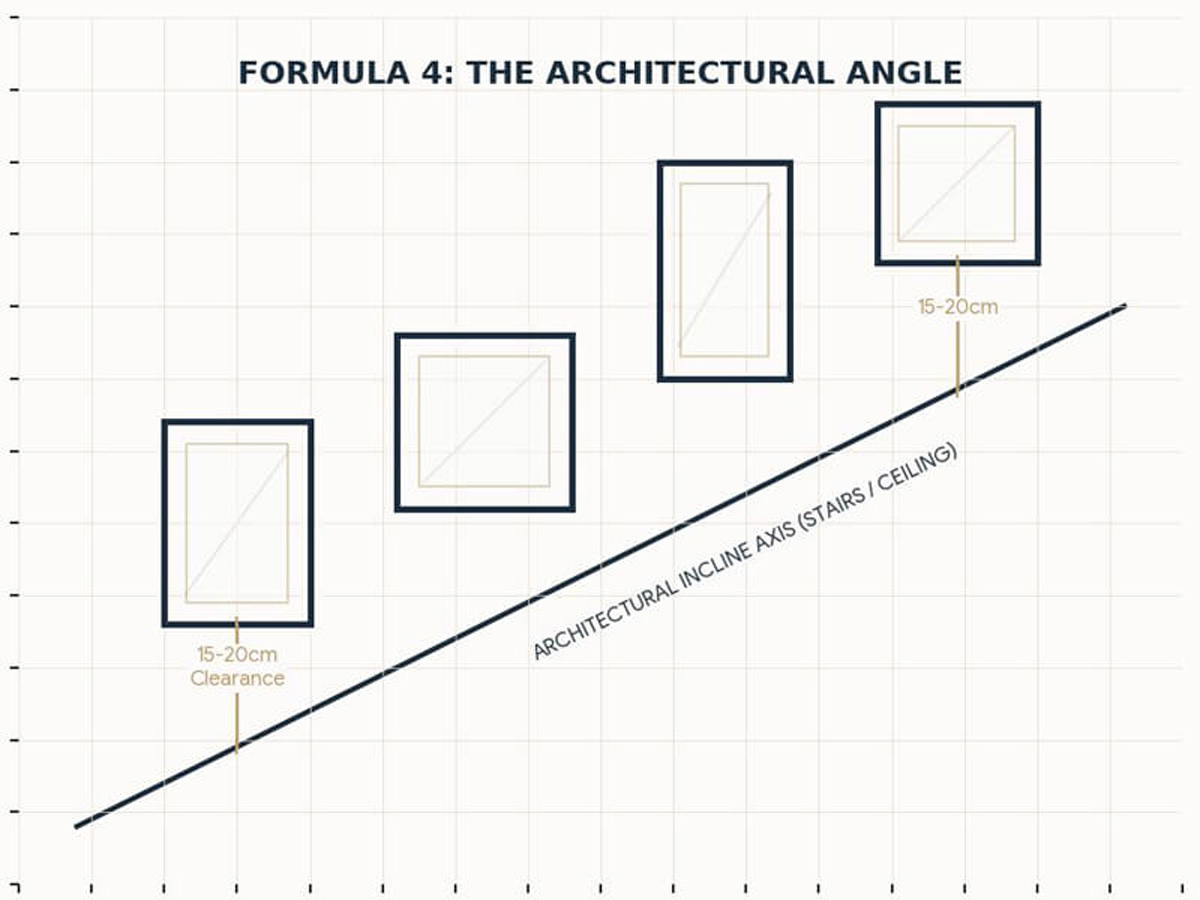
4. The Architectural Angle
- Style: Custom-built and cohesive.
- How it works: Designed specifically to follow the architectural lines of a staircase or raked ceiling. The bottom line of the frames steps up at the exact same angle as the stairs below them.
- Best For: Walls above staircases or in rooms with angled ceilings.
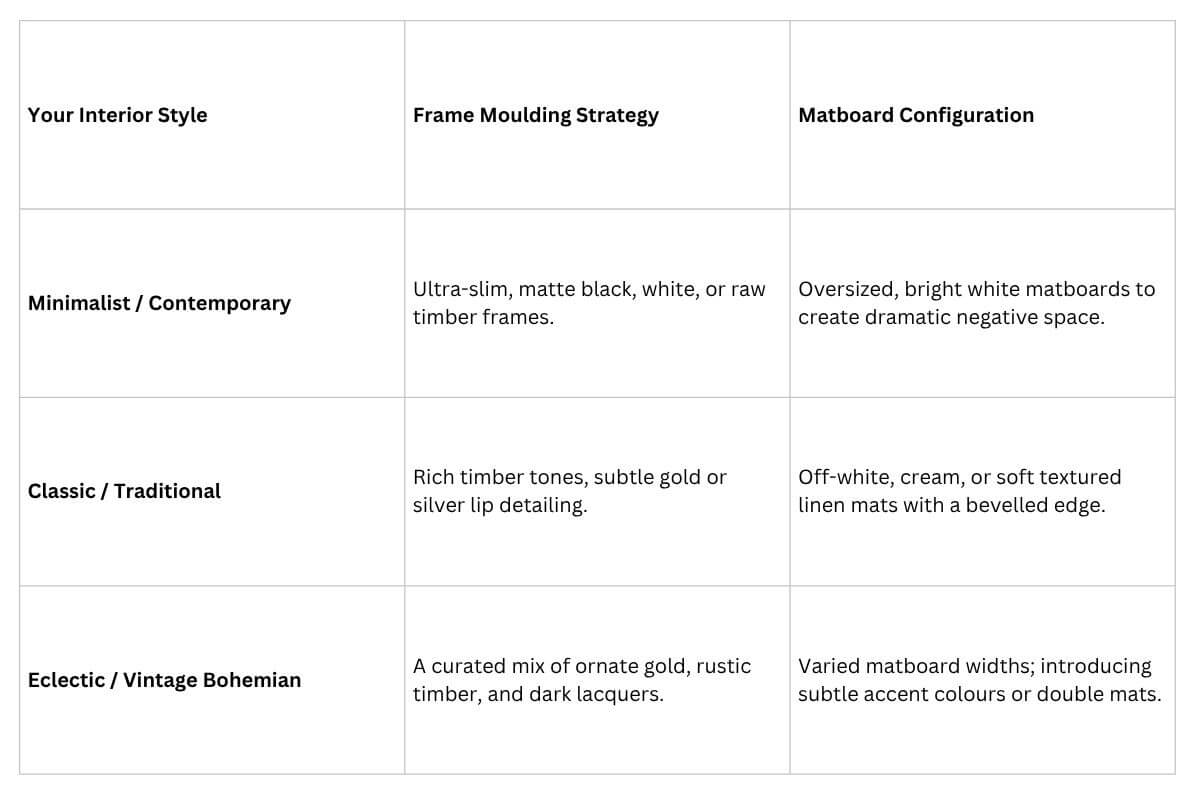
The Gallery Wall Styling Selection Matrix
To ensure your frames complement rather than compete with each other, use this design matrix to select your materials:
Shortcut to Cohesive Framing Design
The secret to an eclectic gallery wall looking high-end instead of messy is a shared design element. If your frame styles are entirely different, ensure all the artwork shares a similar colour palette or matching matboards. Conversely, if your artwork is wildly varied in style and colour, use identical frame profiles to tie the collection together.
Consulting a custom picture framing specialist allows you to discuss layout options, match frame finishes perfectly, and build custom frame sizes that bring structural integrity and conservation quality protection to your curated wall display.
Bring Your Gallery Wall to Life
Planning a gallery wall on paper is a fantastic start, but seeing how the textures, frame profiles, and matboard tones interact in real life makes all the difference. Bring your collection of art, photographs, or memorabilia straight to the design desk at Frame Today, where our qualified consultants will help you carefully map out your layout and ensure your collection is preserved for a lifetime. To get started with expert design advice and complete peace of mind, visit your nearest store today.